

How to Calm Your Cat During Grooming: 7 Proven Techniques
Table of Contents
- Why Cats Get Anxious During Grooming
- How to Calm a Cat Before Grooming Starts
- How to Brush a Cat That Hates Being Brushed
- Handling Aggressive Behavior During Grooming
- Cat Grooming Sedation: When and How
- Step-by-Step Grooming Session Plan
- When to Consult a Veterinarian
- Frequently Asked Questions
Last Updated: October 21, 2026
Why Cats Get Anxious During Grooming
Cats experience genuine stress during grooming, making it essential to learn how to calm cat during grooming. Unlike dogs, most aren't socialized to handling and brushing early, so being touched, restrained, or brushed triggers their fight-or-flight response.
Grooming stacks stressors: unfamiliar environments, loud clippers or dryers, and prolonged contact. For cats with little grooming history, even gentle handling can cause anxiety if they associate grooming with past negative experiences.
Cats show stress through flattened ears, a tucked tail, dilated pupils, or escape attempts. Some freeze, others hiss or swat. Recognizing these signals early lets you pause before true distress.
How to Calm a Cat Before Grooming Starts
The best time to calm cat during grooming is before you begin, the minutes and hours beforehand set the tone for how to calm cat during grooming.
Preparing a Quiet, Safe Environment
Create a grooming space away from other pets, children, and noise. Close windows and use soft, warm lighting, harsh fluorescents increase stress.
Let your cat spend time there before grooming day, with a favorite blanket or toy nearby.
Cats are sensitive to cold, so keep the room warm and a soft towel ready. A chilled cat is a stressed cat.
Using Pheromones and Calming Products
Feline pheromone sprays mimic cats' natural calming scents and reduce anxiety without sedation. Spray the area and your hands beforehand; many cats respond within 10-15 minutes.
Calming treats typically contain L-theanine or tryptophan. Offer them 20-30 minutes before the session so they take effect.

At PatriotPetz, we recommend Catit Creamy Lickable Cat Treats as a reward-based approach to grooming prep. Available in chicken, tuna, salmon, and chicken-liver flavors, these palatable treats create positive associations with grooming time. At just $4.99 per 5-pack, they're an affordable way to support your cat's comfort.

How to Brush a Cat That Hates Being Brushed
Brushing resistance is usually about the tool, handling, or order of operations, not the cat's personality. Fix your technique, not how often you try.
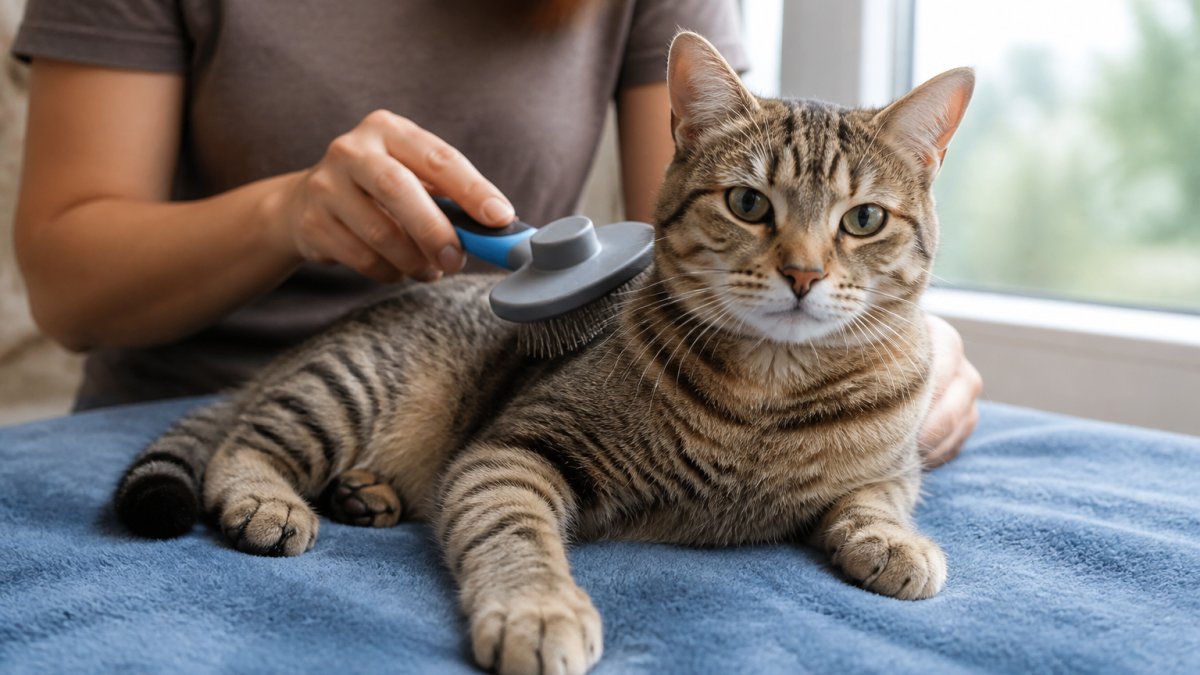
Desensitization Techniques for Grooming Tools
Start with the tool, not the cat's body.
Next, hold the brush while petting your cat with your other hand. Pet first, brush second, for only one or two strokes, the petting pairs the tool with a sensation the cat already accepts.
Work in this order: top of the head, cheeks and chin, then shoulders and back.
Match the brush to the coat. A rubber curry or soft boar-bristle brush is far less aversive than a slicker or undercoat rake.
Handling Mechanics That Prevent a Fight
Where you put your body matters as much as the brush.
Brush with the grain and keep your wrist loose, a stiff wrist tugs the skin and is a common reason cats swat. Use short, light strokes, not long pulls.
Keep one hand free to support the cat's chest or chin, a hand under the chin steadies the head without restraint.
If your cat turns to bite the brush, don't pull it away quickly, that turns the brush into a toy and rewards the bite.
Short Sessions and Positive Reinforcement
The most common mistake is brushing too much at once. Two 3-5 minute sessions per week beat one 20-minute monthly session. End every session on a success, even one stroke.
Reward timing matters. Treat immediately after the last stroke, before you put the brush down, so the cat links the treat to brushing rather than the session's end. A lickable treat on a plate creates a positive final association.

If your cat shows stress signals, ears back, tail swishing, skin rippling, or an attempt to leave, stop immediately. Pushing through resistance teaches the cat grooming is worth fighting.
Handling Aggressive Behavior During Grooming
Some cats don't just get anxious, they become aggressive. Hissing, swatting, or biting requires a different approach than simple anxiety. Aggression usually signals genuine fear or pain.
Recognizing Stress Signals and Body Language
Learn to read stress signals before aggression erupts: ears flattening, dilated pupils, a thumping or tightly tucked tail, and whiskers pointing backward warn your cat is approaching its limit.
A cat that crouches low or freezes is extremely stressed, while slow blinks, ears forward, and a loose tail indicate comfort.
Watch for escalating signals, hissing comes before biting, swatting before scratching. Pause and give space at the early warnings to prevent full aggression.
Safe Restraint Methods Using Towel Wrapping
If gentle handling isn't enough, towel wrapping provides safe restraint. Wrap your cat loosely in a soft towel so only the grooming area is exposed.
Never wrap tightly or restrict breathing, the goal is gentle containment, not immobilization. A comfortable wrap calms many cats by providing swaddling-like security.
Catit Creamy Lickable Cat Treat Chicken & Shrimp 5 Pack →
Keep one hand on your cat's body for contact and reassurance, and speak in a calm, quiet voice, your relaxed demeanor transfers to your cat.
If your cat shows extreme distress even with gentle wrapping, stop and consult a veterinarian. Aggression during grooming sometimes indicates pain from underlying health issues.
Cat Grooming Sedation: When and How
Sedation is a last resort for severe anxiety or aggression that doesn't respond to behavioral approaches, not a first resort.
Veterinary sedation typically involves oral medications like acepromazine or trazodone given 30-60 minutes before the appointment. These reduce anxiety without putting the cat into deep sleep.
Sedation allows grooming but doesn't teach tolerance, when the medication wears off, the anxiety returns. For long-term improvement, combine it with desensitization work.
Discuss sedation with your veterinarian, who will assess your cat's health, age, and anxiety level to recommend medication and dosing. Never sedate your cat without veterinary guidance.
Sedation can be helpful for one-time grooming needs or severe cases, but it's most effective as a temporary bridge while you work on behavioral desensitization.
Step-by-Step Grooming Session Plan
Most guides say "go slow" without defining it. Here's a concrete day-by-day plan, plus separate tracks for brushing, nail trims, and mat removal, a cat that tolerates a brush isn't automatically ready for clippers.
The 7-Day Desensitization Schedule
Use this as a baseline for a cat with no grooming history. Each day takes 3-5 minutes, no more. The rule for every day: stop while your cat is still calm. If your cat walks away, you're done for the day, do not restart.
| Day | Action | Pass Criteria |
|---|---|---|
| 1 | Set the grooming tool on the floor near your cat's resting spot. Do not touch it. | Cat sniffs it or ignores it without fleeing. |
| 2 | Hold the tool in your hand, 3 feet away, while you sit quietly. | Cat stays in the room, ears forward or neutral. |
| 3 | Touch the tool to your cat's shoulder for 1 second, then remove it and offer a treat. | Cat does not flinch, hiss, or leave. |
| 4 | Two 1-second touches on the shoulder and one on the top of the head. Treat after each. | Cat remains in place for all three touches. |
| 5 | Three gentle strokes with the tool on the head and upper back. Treat immediately after. | Cat's tail stays loose; no ear flattening. |
| 6 | Five strokes on the back, avoiding the belly, tail, and paws. Treat and end. | Cat stays for the full five strokes. |
| 7 | Five strokes plus a 30-second pause with the tool resting on your cat's back. Treat and end. | Cat tolerates the pause without swatting or fleeing. |
If your cat fails a day's pass criteria, repeat that day rather than advancing. A cat that needs 10 days to reach Day 5 isn't behind, it's on schedule for its temperament. Cats with prior negative grooming experiences often need two to three repetitions of each step.
Tool-Specific Calming Techniques
Brushing, nail trimming, and mat removal stress cats differently, so the approach should differ too.
Brushing. The brush is a visual trigger for many cats. Keep it out of sight until the last second, then stroke with the grain.
Nail trimming. Nails require paw restraint, which most cats resist more than body brushing.
Mat removal. Mats are the highest-risk grooming task and most likely to end in a bite. Never scissor a mat flush with the skin, skin tents up inside mats and is easy to cut.
Post-Grooming Recovery and Comfort
A stressful session doesn't end when the brush stops. How you handle the next 30-60 minutes determines whether your cat associates grooming with relief or lingering threat.
Give your cat a quiet exit. Don't pick it up or cuddle it immediately, let it walk away and choose where to settle. Offer a high-value or lickable treat at a distance so it can approach on its own terms.
Watch for decompression signs over the next few hours: hiding longer than usual, over-grooming, dilated pupils at rest, or refusing food.
Keep a simple log of each session: date, tool, duration, and the first stress signal you saw.
A structured 7-day plan with pass criteria beats generic "go slow" advice. Track each session, branch your approach by tool, and treat post-grooming recovery as part of the training, not an afterthought.
When to Consult a Veterinarian
If your cat shows signs of pain during grooming, yelping, extreme sensitivity to touch, or limping, schedule a vet check.
Cats with matted fur sometimes have skin infections or parasites underneath.
If your cat becomes aggressive or extremely anxious despite weeks of desensitization, discuss this with your vet.
Calming your cat during grooming takes time, but the payoff is a cat that tolerates handling better and a relationship built on trust.
PatriotPetz offers professional grooming services designed for nervous pets. We stock calming treats and pheromone products to support your efforts at home.
| Approach | Best For | Timeline |
|---|---|---|
| Environmental prep + pheromones | Mild anxiety, new to grooming | 1-2 weeks |
| Desensitization with tools | Moderate anxiety, some grooming history | 4-8 weeks |
| Towel wrapping + gentle restraint | Anxious cats, safe handling | Ongoing sessions |
| Veterinary sedation | Severe anxiety, emergency grooming | As needed with vet guidance |
| Professional grooming (PatriotPetz) | All anxiety levels, expert handling | Recurring appointments |
Frequently Asked Questions
What can I give my cat to calm down before grooming?
Several options exist depending on your cat's needs. Pheromone sprays and diffusers mimic natural calming compounds cats produce. Calming treats and supplements containing L-theanine or tryptophan can reduce anxiety. For severe cases, your veterinarian may prescribe mild sedatives or anxiolytics. Always consult your vet before giving any medication or supplement. Reward-based training with treats like Catit Creamy Lickable treats ($4.99) can also condition positive associations with grooming sessions.
How do I know if my cat is too stressed during grooming?
Watch for clear stress signals: ears pinned back, tail tucking or thrashing, hissing, swatting, or trying to escape. Some cats show subtle signs like dilated pupils, crouching, or trembling. If your cat displays any of these behaviors, stop grooming immediately and allow recovery time. Pushing through stress can worsen grooming aversion and damage your relationship. If stress persists despite your efforts, consult your veterinarian about professional grooming or sedation options.
How often should I groom my anxious cat?
Short, frequent sessions work better than long ones for anxious cats. Aim for 5-10 minute sessions 2-3 times per week rather than one extended appointment. This approach reduces sensory overload and helps your cat build positive associations with grooming. Consistency matters more than duration. As your cat becomes desensitized, you can gradually extend session length. For matted fur, multiple gentle sessions over several weeks are safer than forcing removal in one session.
Should I sedate my cat for grooming at home?
Home sedation requires veterinary guidance and should only be used when other calming techniques fail. Your vet can prescribe appropriate anxiolytics or mild sedatives and advise on safe dosing for your cat's weight and health. Never use over-the-counter sedatives without veterinary approval. Professional groomers experienced with anxious pets may be a safer alternative. Sedation is most appropriate for cats with severe feline anxiety or those requiring extensive mat removal.