

Chicken vs Salmon Dog Food: Which Protein Fits Your Dog
Last Updated: November 5, 2026
Quick Summary
Choose salmon dog food when your dog has a confirmed chicken sensitivity, dull coat, or joint concerns, since salmon is naturally rich in omega-3s. Chicken suits healthy adult dogs and budget-conscious households. Neither protein is universally better, so match the bag to your dog's skin, stomach, and weight.
- Chicken is the leading dog food ingredient by volume, with 588,418 tons used in one production analysis.
- Convert protein to a dry-matter basis to compare canned and dry formulas fairly.
- A true elimination trial usually runs at least eight weeks with no treats or flavored chews.
- Many salmon formulas still contain chicken fat, chicken liver, or poultry by-products.
- Transition from chicken to salmon gradually over seven to ten days to prevent stomach upset.
Table of Contents
- Chicken vs Salmon Dog Food: A Side-by-Side Comparison
- Nutritional Differences: Protein, Fat, and Omega-3s
- Salmon Dog Food Benefits for Skin, Coat, and Joints
- Salmon vs Chicken Dog Food for Allergies
- Salmon Dog Food for Sensitive Stomachs
- How to Switch Dog Food from Chicken to Salmon
- Chicken vs Salmon: Pros, Cons, and Which Dogs They Suit
- Pick the Right Bag at PatriotPetz
- Frequently Asked Questions
Chicken vs Salmon Dog Food: A Side-by-Side Comparison
Chicken is the leading ingredient in dog food by volume, with 588,418 tons used in dog-food products during one recent production analysis (Decision Innovation's pet food production and ingredient analysis). That stat tells you something important: most dogs eat chicken, and most do fine on it.
Here at PatriotPetz, owners often ask us about chicken vs salmon dog food when they are trying to sort out a skin problem or a finicky stomach.
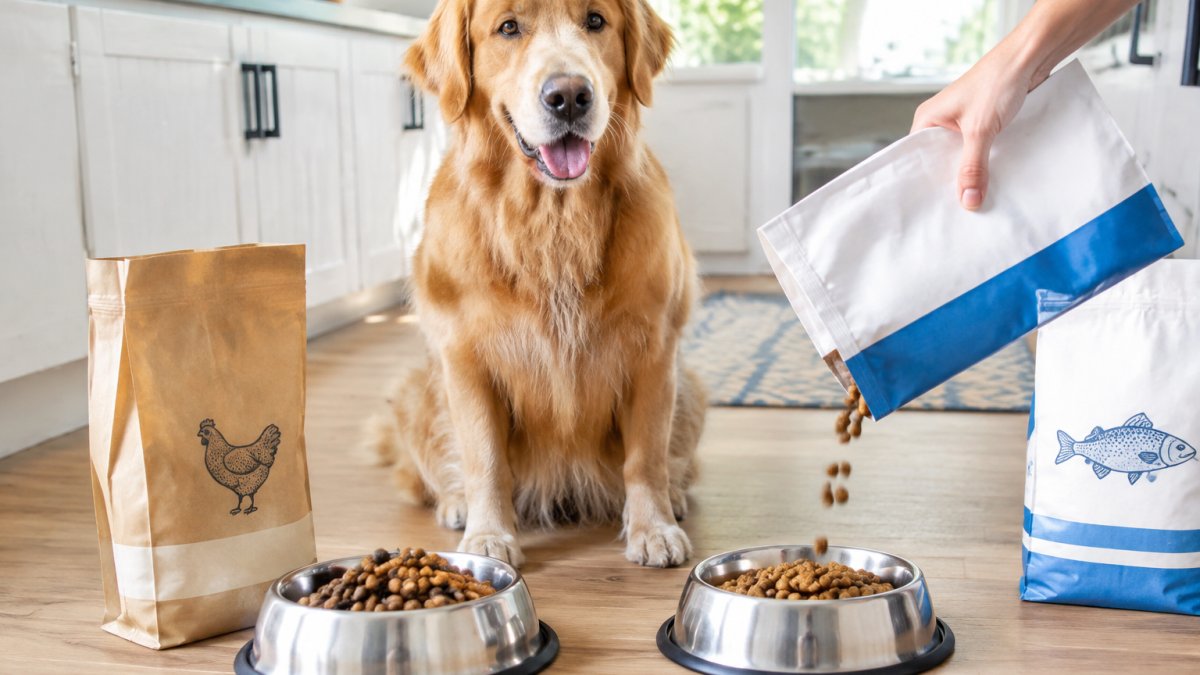
Quick Comparison Table: Chicken vs Salmon Formulas
| Factor | Chicken-Based Formula | Salmon-Based Formula |
|---|---|---|
| Protein type | Familiar poultry protein | Fish protein, often used as a novel protein |
| Omega-3 content | Low unless supplemented | Naturally rich in EPA and DHA |
| Fat and calories | Varies by formula; often lean | Often higher fat from fish oil |
| Allergy likelihood | Common trigger in sensitive dogs | Lower for dogs already eating poultry |
| Best for | Budget-friendly everyday feeding | Skin, coat, and joint support |
| Watch out | Chicken fat or by-product hiding in "salmon" bags | Fishy odor and higher cost per pound |
Nutritional Differences: Protein, Fat, and Omega-3s
Both proteins can anchor a complete and balanced diet. The real differences show up in amino acid profile, fat content, and omega-3 fatty acids, and those differences matter more than the front of the bag. The problem is that most comparisons stop at "chicken is lean, salmon has omega-3s" and never show you how to verify either claim on the bag in your hand.
Protein Content and Amino Acids
Chicken and salmon are both complete animal proteins, meaning they supply all the essential amino acids a dog needs. Salmon delivers similar protein quality with a different fat profile, and that fat is where the story gets interesting.
What most guides miss is that the protein percentage on a label tells you almost nothing on its own. The guaranteed analysis is reported on an "as-fed" basis, which means it includes the water in the food (the FDA).
To compare fairly, convert to dry matter. Subtract the moisture percentage from 100 to get dry matter, then divide the nutrient percentage by the dry matter and multiply by 100.
Fat Content, Calories, and Weight Management
Fat is also where the omega-3 story lives, and the guaranteed analysis rarely tells you how much EPA and DHA you are actually getting. A bag can list salmon first and still contain modest omega-3 levels if the fish oil is low on the ingredient list or if the formula is built mostly on salmon meal rather than fresh fish. Look for a named fish oil or a stated omega-3 percentage on the label, and treat "salmon flavor" or "fish meal" as weaker signals than "salmon oil" or "menhaden fish oil."
Calorie density varies more than owners expect. Two salmon kibbles can differ by 50 or more calories per cup, which over a month is the difference between a stable weight and a slow gain. Compare the calorie statement (kcal per cup or per kilogram) on the bag rather than assuming one cup equals another, and adjust the portion to the calorie content, not the scoop size.
Watch out: a formula that markets itself on omega-3s but lists fish oil after the salt or preservatives is unlikely to deliver a meaningful dose, so read the ingredient order before you pay a premium for the claim.
Salmon Dog Food Benefits for Skin, Coat, and Joints
Salmon-based dog food contains omega-3 fatty acids, specifically EPA and DHA, depending on the formula. Omega-3 fatty acids are a nutrient found in many fish-based foods.
Results vary by dog and by how much fish oil the formula actually contains. Look for salmon or fish oil high in the ingredient list, not just mentioned near the bottom.
If skin and coat are your main concern, a formula built specifically for that job makes sense. The Diamond Naturals Skin & Coat Salmon & Potato Formula Dry Dog Food 30lb pairs salmon with potato for exactly this purpose. For dogs that need joint support alongside omega-3s, the Senior Dog Support Box Joint And Omega 3 Bundle bundles those concerns together.

Salmon vs Chicken Dog Food for Allergies
Salmon vs chicken dog food for allergies is the question that drives most of these conversations, and the honest answer is that salmon wins only if your dog is actually allergic to chicken. True food allergies are less common than owners assume.
A food allergy is an immune response, typically to a protein, and it usually shows up as itching, ear infections, or gastrointestinal signs that persist year-round rather than seasonally. A food sensitivity or intolerance is a non-immune reaction, often to a specific ingredient or to a high-fat formula, and it tends to show up as loose stools, gas, or vomiting.
Why Elimination Diets Beat Guessing
The details are where most owners go wrong.
A common mistake is assuming a bag labeled "salmon" contains no chicken. Many salmon formulas include chicken fat, chicken liver, or poultry by-products, and a chicken-sensitive dog can react to those.
A second mistake is choosing a "novel" protein the dog has already eaten. If your dog has had salmon treats or salmon-based toppers, salmon is no longer novel, and the trial is compromised before it starts.
If you are working through a sensitivity, our guide on choosing premium food for sensitive dogs without the guesswork walks through the process in more detail.
Watch out: a dog with a genuinely itchy, inflamed skin condition needs a veterinarian's diagnosis, not a food experiment.
Health Extension Grain Free Dry Dog Food Salmon 23.5 lb →
Salmon Dog Food for Sensitive Stomachs
Salmon dog food for sensitive stomachs is a reasonable option, but fish is not automatically gentler than poultry. Digestibility depends on the whole formula, including the carbohydrate source, the fat level, and how abruptly you change foods.
Higher fat levels, however, can trigger loose stools in some dogs, so introduce any richer formula slowly.
Tolerance is individual. A dog that vomited on chicken may thrive on salmon, and a dog that did fine on chicken may not tolerate fish. Judge by your dog's stool quality and appetite over two to three weeks, not by the first bowl.
How to Switch Dog Food from Chicken to Salmon
Knowing how to switch dog food from chicken to salmon matters as much as choosing the bag. A gradual transition over seven to ten days prevents the stomach upset that abrupt changes cause.
Use this schedule as your starting point:
- Days 1-2: 75% old food, 25% new salmon formula
- Days 3-4: 50% old food, 50% new formula
- Days 5-6: 25% old food, 75% new formula
- Days 7-10: 100% new formula
Slow down if you see loose stools, gas, or vomiting, and hold at the previous ratio for a few extra days. Dogs with a sensitive stomach may need two full weeks.
Keep salmon treats on hand for training and rewards during the switch so your dog stays on one protein. The Zignature Salmon Heart Shaped Dog Treats 4oz fit that role well. Mixing in a little wet food can also help a picky dog accept the new kibble; the Health Extension Grain Free Wet Dog Food Northern Catch Salmon 12.5 Oz is one option at $3.99 a can.


Chicken vs Salmon: Pros, Cons, and Which Dogs They Suit
Neither protein is universally better. The right choice depends on your dog's age, weight, skin, and stomach, and on your budget.
Chicken
- Pros: widely available, affordable, lean protein, familiar to most dogs
- Cons: a common trigger for sensitive dogs, less omega-3 content
- Best for: healthy adult dogs, budget-conscious households, dogs with no poultry sensitivity
- Skip if: your dog has been diagnosed with a chicken allergy
Salmon
- Pros: rich in omega-3 fatty acids, supports skin and coat, often suits dogs with poultry sensitivities
- Cons: higher cost, higher fat, fishy odor, and chicken ingredients can hide in the formula
- Best for: dogs with dull coats, joint concerns, or a confirmed chicken sensitivity
- Skip if: your dog gains weight easily or has trouble with high-fat foods
Life stage matters too. Puppies need carefully balanced growth formulas regardless of protein, and senior dogs often benefit from omega-3s but need portion control. Ask before you buy rather than assuming a salmon bag suits every age.
Pick the Right Bag at PatriotPetz
We can help you match the bag to your dog's needs.
Our salmon lineup covers the common reasons owners make the switch:
- Health Extension Grain Free Dry Dog Food Salmon 23.5 lb at $79.99
- Diamond Naturals Skin & Coat Salmon & Potato Formula Dry Dog Food 30lb at $51.99
- Health Extension Grain Free Wet Dog Food Northern Catch Salmon 12.5 Oz at $3.99
If chicken suits your dog, the Health Extension Grain Free Dry Dog Food Chicken & Turkey 23.5 lb at $75.99 and Diamond Naturals Canino Adulto Chicken at $51.99
Frequently Asked Questions
Is salmon or chicken better for dogs with sensitive stomachs?
Neither protein is universally gentler. A dog's tolerance depends on its own history and how the food is formulated. Salmon dog food for sensitive stomachs is often tried because fish is a less common protein in many dogs' diets, which can help when chicken is suspected. The only reliable way to know is a gradual transition over seven to ten days while watching stool quality and appetite. If symptoms persist, work with your veterinarian rather than switching brands repeatedly.
Is chicken a common food allergen for dogs?
Chicken appears frequently in dog-food formulas, and chicken is one of the most common proteins in dog-food products. That frequent exposure is one reason chicken shows up often in allergy discussions. Still, a suspected allergy needs a proper diagnosis, usually an elimination diet guided by a veterinarian, not a guess based on the ingredient list alone. Salmon formulas can also contain chicken fat or liver, so read the label closely.
Can I switch my dog from chicken-based food to salmon-based food?
Yes, and a gradual transition is the safest route. Mix increasing amounts of the new salmon food into the old chicken food over seven to ten days, starting around 25 percent new food and building from there. Watch for loose stools, gas, itching, or refusal to eat. If signs of intolerance appear, slow the schedule down. Keeping the same feeding amount and schedule helps isolate whether the protein change is the cause of any reaction.
Does salmon dog food help with skin and coat health?
Salmon is a natural source of omega-3 fatty acids, including EPA and DHA. Results depend on the full formula, not just the protein name, so check that the food is complete and balanced. Diamond Naturals Skin & Coat Salmon & Potato Formula at PatriotPetz is one option available here.
Is it okay for dogs to eat salmon dog food every day?
Yes, as long as the food is complete and balanced for your dog's life stage. Check that the label states the food is formulated for your dog's life stage. Rotate only if your dog tolerates change well. Keep portions aligned with the feeding amount on the bag and monitor weight, since salmon formulas can vary in fat content and calories from bag to bag.
Sorting out whether your dog needs salmon or does fine on chicken is a decision worth getting right the first time. Bring us your dog's age, weight, and any skin or stomach issues, and we will point you to the formula that fits rather than the one with the best packaging. Call PatriotPetz today and let our team help you choose a food your dog will thrive on, from grain-free salmon kibble to skin-and-coat formulas and gentle treats for the transition.
