

7 Gentle Pet Grooming Steps for Anxious Dogs
Last Updated: October 27, 2026
Quick Summary
Gentle pet grooming means handling a dog slowly, calmly, and on its own terms during brushing, bathing, drying, and nail care. Watch for early stress signals like lip licking, yawning, whale eye, and a tucked tail, then pause before the dog tips into panic. Move at the dog's pace and never push through fear.
- Dogs were professionally groomed about four times a year on average, per a 2022 study.
- Advance to the next desensitization step only when the dog leans in or stays relaxed for 10 seconds per area.
- If the dog stops eating treats during a session, end it and repeat the previous step.
- Restraint should be a last resort for anxious dogs, since feeling trapped can increase fear and bite risk.
- Stop immediately if the dog growls, air-snaps, thrashes, or pants heavily without heat.
Table of Contents
- Why Gentle Pet Grooming Matters for Anxious Dogs
- Signs of Stress in Dogs During Grooming
- How to Prepare a Dog for Grooming
- Dog Grooming Desensitization: A Step-by-Step Plan
- How to Calm a Dog During Grooming
- Safety and Humane Handling Boundaries
- When Anxiety May Need Veterinary Support
- Booking a Gentle Grooming Session at PatriotPetz
- Frequently Asked Questions
Why Gentle Pet Grooming Matters for Anxious Dogs
Gentle pet grooming is the practice of handling a dog slowly, calmly, and on its own terms during brushing, bathing, drying, and nail care.
The stakes are real. A 2022 study on grooming-related concerns in companion animals found that dogs were professionally groomed about four times a year on average, and that inadequate grooming can cause pain, discomfort, and other threats to health and well-being. Skipping grooming isn't the safe choice for a nervous dog. Doing it gently is.
What Stress Does to a Dog During Grooming
Stress floods a dog's body with the same fight-or-flight hormones that fire during a thunderstorm or a vet visit. The heart rate climbs, the pupils widen, and the dog stops thinking clearly. A fearful dog may freeze, try to bolt, or snap at a hand that reaches for its paw.
That's why low-stress grooming isn't just kinder. It's safer for everyone in the room, dog and groomer alike.
If you also have a cat, our guide on how to calm your cat during grooming covers the same gentle-handling approach for felines.
Signs of Stress in Dogs During Grooming
Signs of stress in dogs during grooming include lip licking, yawning, tucked tail, stiff body posture, whale eye (showing the whites), panting without heat, and pulling away from touch. Catching these early signals lets you pause before a nervous dog tips into panic.
Early Signals to Catch Before They Escalate
Watch for the small stuff first.
- Lip licking and yawning when neither hunger nor tiredness fits
- Whale eye and ears pinned flat back
- Freezing or a body that goes rigid under your hand
- Tail tucked tight against the belly
- Shaking off as if wet, a classic stress release
- Growling or air-snapping, which means the dog has run out of gentler warnings
A common mistake is pushing through the first three signals. Once a dog escalates to growling, the lesson it learns is that quiet signals don't work.
How to Prepare a Dog for Grooming
That last one matters more than people expect. Dogs read our tension. A rushed, anxious handoff tells the dog something is wrong.
Dog Grooming Desensitization: A Step-by-Step Plan
A common mistake is moving forward on a calendar schedule rather than the dog's behavior. Use the criteria below to decide when to advance. If the dog shows stress signals (lip licking, freezing, pulling away), stay at the current step for another week or back up.
Weeks 1-2: Touch and Handling
For rewards, small soft treats work best, like Zuke's Mini Naturals training treats.

Advance when: the dog leans into the touch or stays relaxed for 10 seconds of continuous handling on each area without pulling away.
Weeks 3-4: Tools and Sounds
Advance when: the dog voluntarily sniffs the tool, accepts three brush strokes on a shoulder or flank without tension, and does not startle at the sound of clippers running three feet away.
Weeks 5-6: Short Practice Sessions
Advance when: the dog completes a two-minute session with relaxed body language and takes treats throughout. If the dog stops eating, end the session and repeat the previous step.
Adding Water and Dryers
- Water: start with a damp washcloth on a paw, then a running faucet in the next room, then a shallow basin. Reward calm sniffing and standing near water. Advance to a cup of water poured over a leg only when the dog stands willingly.
- Dryer: turn the dryer on in another room for 10 seconds while feeding treats. Gradually move closer over several sessions. Never point the nozzle at the dog's face or ears. Advance when the dog remains relaxed with the dryer running two feet away.
When to Pause or Stop
If the dog hides, refuses all treats, or shows whale eye or growling, stop the session immediately. Do not push through. Repeated exposure to a scary tool without a positive outcome can make the fear worse. Go back to the last successful step and spend more time there.
The plan moves at the dog's pace, with clear criteria for when to advance to the next stage.
| Stage | What to do | Advance when |
|---|---|---|
| Weeks 1-2: Touch and handling | Gentle handling of each area with small soft treats | Dog leans in or stays relaxed 10 seconds per area |
| Weeks 3-4: Tools and sounds | Introduce tools and clipper sounds from three feet away | Dog sniffs tool, accepts three brush strokes, no startle |
| Weeks 5-6: Short practice sessions | Two-minute sessions with treats throughout | Relaxed body language for two minutes; stops eating means end session |
| Adding water | Damp washcloth on paw, faucet nearby, shallow basin | Dog stands willingly before pouring a cup over a leg |
| Adding dryer | Dryer on in another room for 10 seconds while feeding treats | Dog relaxed with dryer running two feet away |
How to Calm a Dog During Grooming
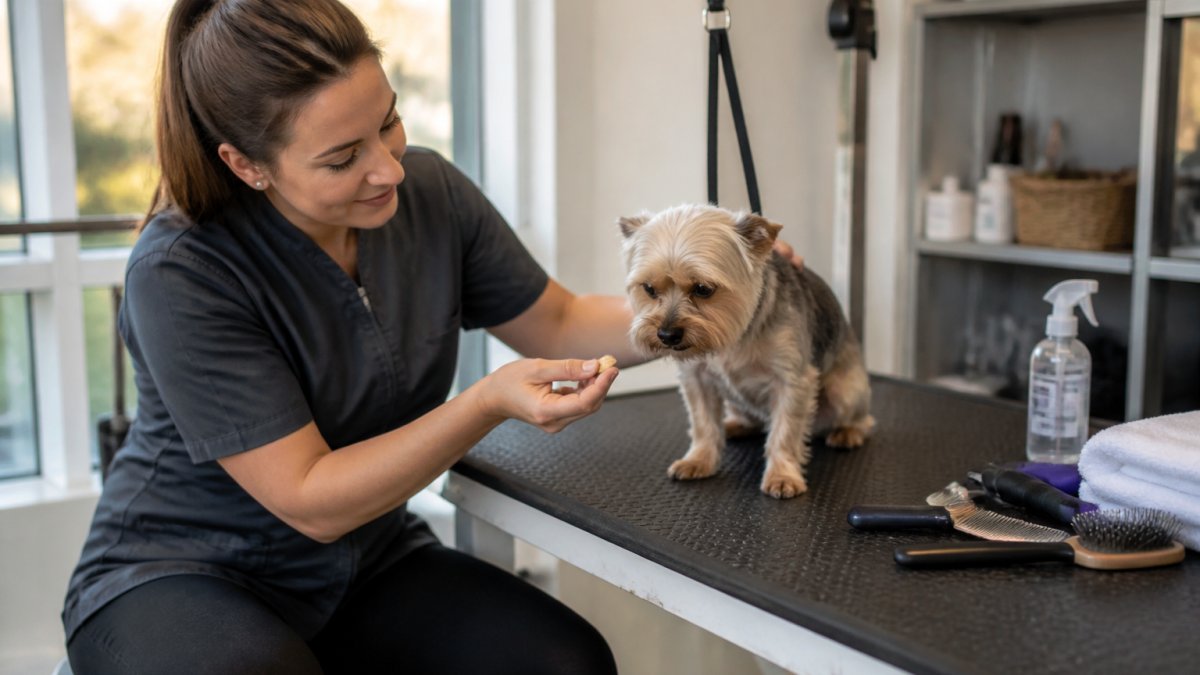
Keep a bag of Zuke's Mini Naturals chicken treats on hand for these reward moments.

Safety and Humane Handling Boundaries
Watch out: forcing a fearful dog through a full groom "to get it over with" can turn a nervous dog into a defensive one, and that fear often lasts for years.
Recognizing a Dog That Is Shutting Down
A dog that freezes is not necessarily calm. A stiff body, closed mouth, wide eyes, and a refusal to take treats are signs the dog has stopped coping. This is different from a dog that is tolerating handling but still relaxed. If the dog will not eat, do not continue. A dog that is shut down may not growl or snap, but it is still under stress and can escalate without warning.
When Restraint Increases Risk
Restraint, holding a dog still by the collar, scruff, or body, can increase fear and the risk of a bite. A dog that feels trapped may escalate from freezing to growling to snapping. For anxious dogs, restraint should be a last resort, not a first step. If a groomer reaches for restraint before trying patience, breaks, or a different approach, that groomer is not a good fit for a nervous dog.
Muzzles: A Safety Tool, Not a Fix
Muzzles have a place when a dog has a bite history or when handling is unavoidable and the dog cannot be safely managed otherwise. But a muzzle does not treat fear. It only prevents injury. A dog that needs a muzzle for routine grooming should also be evaluated by a veterinarian or qualified behavior professional to address the underlying anxiety. A muzzle must fit properly so the dog can pant and drink, and it should be introduced gradually with treats before any grooming session.
Stop Criteria
Stop the session immediately if any of the following occur:
- The dog growls, air-snaps, or attempts to bite
- The dog tries to escape the table or thrashes uncontrollably
- The dog stops taking treats and shows a stiff body or whale eye
- The dog pants heavily without heat or drools excessively
If a session is stopped, do not restart it that day. Give the dog a break and try again another day with a slower approach. A groomer who respects these limits is safer for the dog and for the people handling it.
When Anxiety May Need Veterinary Support
A vet can rule out pain as the cause. Ear infections, arthritis, and dental pain all make handling feel worse. They can also discuss calming options for severe cases. Grooming stress statistics are hard to pin down, but a grooming-industry trend report shows steady demand for gentler, skin-sensitive grooming, which tells us owners are asking for exactly this kind of care.
Booking a Gentle Grooming Session at PatriotPetz
Our dog and cat grooming services include our Premium Dog Grooming service ($60.00, with prices varying by breed, coat condition, day, and service time), which covers a warm jet wash, de-shed treatment, nail trimming, paw pad shaving, ear cleaning, conditioning spray, fragrance, and a haircut of choice. Pet age, health, and vaccination requirements apply.
Frequently Asked Questions
How do you groom a dog that is anxious?
Go in short, gradual sessions and let the dog set the pace. Start with handling and brushing only, then add tools one at a time, pairing each new step with treats and praise. Watch body language and stop before stress escalates. A 2022 study published on PubMed Central notes that inadequate grooming can cause pain and discomfort, so skipping grooming entirely is not the answer. Gentle pet grooming means small steps, frequent breaks, and never forcing a step the dog cannot tolerate.
What are the signs of stress in dogs during grooming?
Watch for lip licking, yawning, tucked tail, flattened ears, whale eye (showing the whites), tense posture, trembling, panting without heat, and pulling away from the tool. Escalation looks like growling, snapping, or freezing in place. Respond at the first signals by pausing, giving a break, and offering a treat. If a dog freezes or snaps, end the session. Catching early signs keeps a nervous dog from tipping into a fear response that makes the next visit harder.
How long does it take for a dog to get used to grooming?
There is no fixed timeline, and the research does not establish one. Dogs in a 2022 PubMed Central study were professionally groomed about four times a year on average, but that reflects typical frequency, not a training schedule. A home desensitization plan usually runs six weeks or more, with short daily sessions. Progress depends on the dog's history, age, and how consistently you pair handling with treats. Move faster only when the dog stays relaxed.
Should I stay with my dog during a grooming appointment?
Ask the groomer. Some dogs settle better when the owner leaves, and hovering can raise a dog's arousal. Others do better with a familiar face nearby. At PatriotPetz, grooming is one-on-one with gentle handling for nervous pets, so ask about the setup when you call. If you do stay, keep quiet and let the groomer lead. If you leave, request a check-in if the dog shows stress. Either way, share your dog's triggers and stress signals beforehand.
A nervous dog doesn't have to dread grooming forever. With patience, short sessions, and the right treats, most dogs learn to tolerate, and eventually enjoy, the table. PatriotPetz is here to help with gentle handling, honest advice, and a calm setting built for anxious pets. Get started with PatriotPetz and give your dog a grooming experience that builds trust instead of fear.
