

How to Choose Healthy Dog Food: A Step-by-Step Guide
Last Updated: October 23, 2026
Quick Summary
To choose healthy dog food, start by identifying your dog's age, size, and health status, then read the ingredient list and guaranteed analysis on the label to find named meat sources and AAFCO certification. Your dog's life stage should be your first filter when shopping, followed by size and breed considerations.
- Puppies need growth-labeled food, adult dogs need maintenance formulas, and senior dogs benefit from lower-calorie options with joint support.
- The first five ingredients matter most and should include named meat sources like chicken, beef, or fish rather than vague terms like meat meal.
- Look for AAFCO statements on labels proving the food meets minimum nutritional standards through feeding trials or formulation analysis.
- Adult dogs need at least 18% crude protein and 5% fat, with proper balance of calcium, phosphorus, and essential fatty acids.
- Transition to new food gradually over 7-10 days by mixing percentages to avoid digestive upset.
Table of Contents
- How to Choose Healthy Dog Food: Start With Your Dog's Needs
- How to Read Dog Food Labels Like a Pro
- Understanding Complete and Balanced Dog Food
- Best Dog Food for Sensitive Stomachs and Food Allergies
- How to Transition Dog Food Safely
- Evaluating Manufacturer Quality and Nutrition Expertise
- When to Consult a Veterinarian or Nutritionist
- Frequently Asked Questions
How to Choose Healthy Dog Food: Start With Your Dog's Needs
Choosing the right dog food feels overwhelming, with hundreds of options, confusing ingredient lists, and endless marketing claims.

Start by asking yourself three questions. What's your dog's age? How big is your dog? Does your dog have any health issues?
At PatriotPetz, we help pet owners cut through the noise daily. Most focus on price or brand reputation, but the best choice depends on your dog's life stage, size, and health status.
Life Stage Matters: Puppies, Adults, and Senior Dogs
Puppies need more calories and specific nutrients for bone development. Adult dogs need balanced nutrition to maintain health. Senior dogs need adjusted portions and sometimes joint support.
A puppy's food should be labeled for growth. Adult dogs need food formulated for adult maintenance.
Feeding a puppy adult food can stunt growth, and feeding a senior dog puppy food leads to obesity.
Size and Breed Considerations
Small breeds have faster metabolisms and need smaller kibble they can chew.
Some breeds are prone to specific health issues. Giant breeds like Great Danes need joint support early. Small breeds like Chihuahuas need dental care support.
Look for formulas labeled for your dog's size category. Small breed formulas have smaller kibble pieces. Large breed formulas have balanced minerals for bone health.
How to Read Dog Food Labels Like a Pro
Most pet owners skip reading the label, buying based on package design or a friend's recommendation.
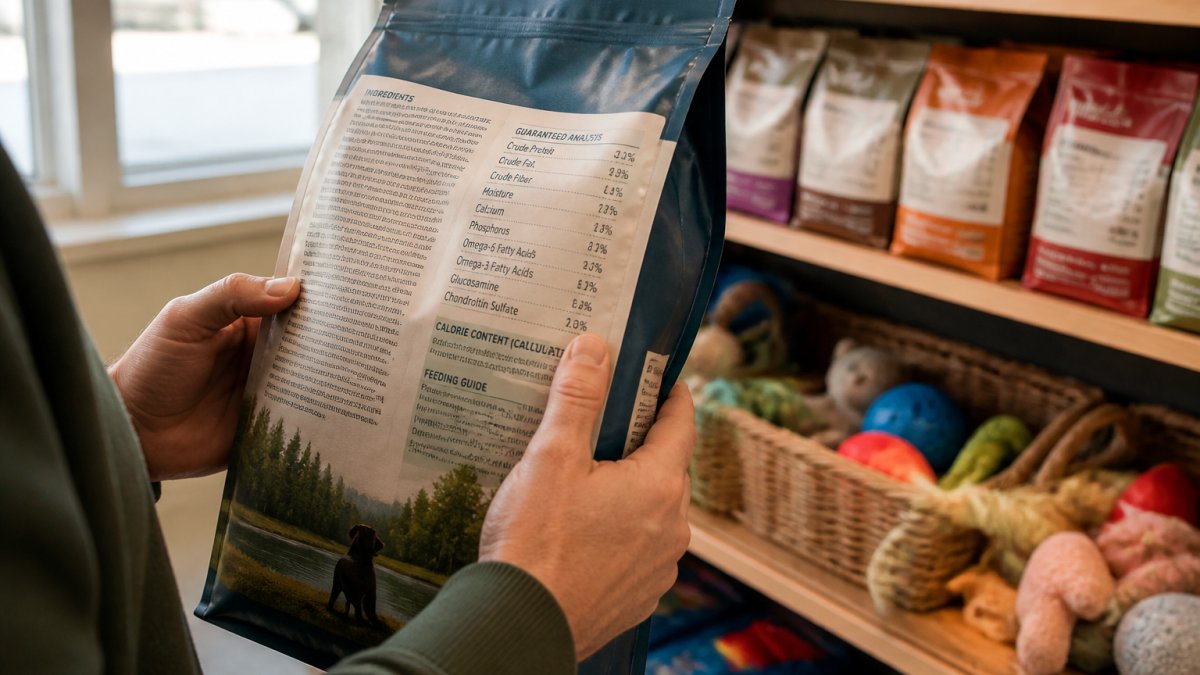
Start at the ingredient list. Look for named meat sources like chicken, beef, or fish, not vague terms like "meat meal" or "animal by-products."
Next, check the guaranteed analysis. This tells you the minimum protein and fat content. It shows the maximum fiber and moisture. These numbers are required by law.
What the Ingredient List Actually Tells You
Named meat sources are better than generic meat meals. Whole grains like brown rice or oats beat corn or wheat fillers. Vegetables and fruits add fiber and nutrients.
Watch for red flags. Artificial colors, flavors, or preservatives are unnecessary. By-products mean leftover parts of meat processing.
A quality ingredient list reads like real food: chicken, sweet potato, peas, fish oil. If you recognize the ingredients, that's a good sign.
Guaranteed Analysis and Nutrient Content
The guaranteed analysis is a legal requirement showing minimum crude protein and fat and maximum crude fiber and moisture. These percentages are the nutritional backbone of the food.
Dogs need adequate protein for muscle maintenance, fat for energy and skin and coat health, and fiber for digestion.
Compare guaranteed analyses across similar foods. A premium food might have 25% protein versus 18% in a budget option.
Understanding Complete and Balanced Dog Food
A "complete and balanced" claim means the food meets minimum nutritional standards. It's a baseline requirement, not a quality indicator, and not all complete and balanced foods are equal.
The claim is backed by either feeding trials or formulation analysis.
Complete and balanced is necessary but not sufficient: it means the food won't cause deficiencies, not that it's optimal for your specific dog.
AAFCO Standards and Nutritional Adequacy Statements
AAFCO, the Association of American Feed Control Officials, sets nutritional standards for U.S. pet food. Every dog food sold here must meet AAFCO standards or state that it doesn't.

Look for the AAFCO statement on the label, such as "This food is complete and balanced for adult dogs." It's your proof the food meets minimum requirements.
The statement also shows whether the food was tested through feeding trials or formulation analysis. Feeding trials are the gold standard. AAFCO's official guidelines on pet food standards explain exactly what these standards mean.
Protein, Fat, and Essential Nutrients Your Dog Needs
Protein builds muscle, supports immune function, and maintains skin and coat.
Fat provides energy and supports nutrient absorption, and dogs need essential fatty acids for brain and heart health.
Dogs also need vitamins and minerals: calcium and phosphorus for bones, taurine for heart health, and B vitamins for energy and metabolism.
Research from veterinary nutrition studies on essential nutrients for dogs shows that nutrient balance matters as much as total percentages.
Best Dog Food for Sensitive Stomachs and Food Allergies
Some dogs have sensitive digestion. Others have true food allergies. These aren't the same thing. Understanding the difference helps you choose the right food.
Sensitive stomachs often respond to limited ingredient diets. Food allergies require elimination diets to identify the trigger. Both situations need careful food selection and sometimes veterinary guidance.

Identifying Food Allergies and Sensitivities
Food sensitivities cause digestive upset, vomiting, diarrhea, or gas. Food allergies cause skin problems, ear infections, or itching. A dog can have both.
True food allergies are rare. Most dogs with digestive issues have sensitivities to specific ingredients or food quality.
Earthborn Holistic Unrefined Ancient Grains & Superfoods Dry Dog Food Roasted →
Watch your dog's symptoms. Keep a food diary. Note what you feed and any symptoms that follow. This information helps your veterinarian identify patterns.
Limited Ingredient Diets and Elimination Options
Limited ingredient diets contain fewer components. They're easier to digest. They reduce the chance of triggering sensitivities. They're also useful for identifying specific food triggers.
Natural Balance L.I.D. Adult Dry Dog Food comes in limited ingredient recipes.
If your dog has confirmed food allergies, work with your veterinarian. They might recommend a prescription diet or a specific limited ingredient food.
How to Transition Dog Food Safely
Switching foods too quickly causes digestive upset. Your dog's gut bacteria need time to adjust. A proper transition takes 7-10 days. Rushing this step leads to vomiting, diarrhea, and unhappy dogs.
The transition timeline matters. So does monitoring your dog's response. Some dogs transition easily. Others need a slower switch or a different food entirely.
The 7-10 Day Transition Timeline
Day 1-2: Mix 25% new food with 75% old food. Feed this blend for two meals.
Day 3-4: Mix 50% new food with 50% old food. Feed this blend for two meals.
Day 5-6: Mix 75% new food with 25% old food. Feed this blend for two meals.
Day 7-10: Feed 100% new food.
This gradual transition allows your dog's digestive system to adapt.
Some dogs need a slower transition.
Monitoring Your Dog During the Switch
Watch your dog's stools during the transition. Firm, well-formed stools mean the transition is working. Soft stools or diarrhea mean you're moving too fast. Slow down the transition if needed.
Monitor energy levels and appetite. Your dog should seem normal. Lethargy or loss of appetite might indicate a food issue.
Some dogs have mild digestive adjustment for a day or two. This is normal. Vomiting or severe diarrhea is not normal.
| Transition Day | New Food % | Old Food % | Expected Stool |
|---|---|---|---|
| Days 1-2 | 25% | 75% | Firm |
| Days 3-4 | 50% | 50% | Firm |
| Days 5-6 | 75% | 25% | Firm |
| Days 7-10 | 100% | 0% | Firm |
Evaluating Manufacturer Quality and Nutrition Expertise
Not all dog food brands are equal. Some invest heavily in nutrition research. Others prioritize profit margins. Knowing the difference helps you choose food you can trust.
Quality manufacturers are transparent. They publish their research. They answer customer questions. They invest in quality control. They stand behind their products.
Feeding Trials and Quality Control Standards
Feeding trials prove a food works for real dogs. A manufacturer feeds the food to dogs and monitors their health.
Formulation analysis is cheaper but less reliable. A nutritionist calculates whether the recipe should meet standards. This doesn't prove the food actually works. Feeding trials are the gold standard.
Ask manufacturers about their quality control. Do they test ingredients? Do they test finished products? Do they have recalls?
Choosing Between Dry Food, Wet Food, and Kibble
Dry food (kibble) is convenient and affordable. It supports dental health through chewing action. It lasts longer once opened.
Wet food is more palatable. Some dogs prefer the taste and texture. Wet food has higher moisture content.
Many pet owners mix dry and wet food. This combines convenience with palatability. It's a practical middle ground.
Earthborn Holistic Unrefined Ancient Grains & Superfoods Dry Dog Food Roasted Lamb is a quality kibble option available at PatriotPetz for $75.99.
When to Consult a Veterinarian or Nutritionist
Some situations require professional guidance. Your veterinarian should be your first stop. They know your dog's health history.
Veterinary nutritionists are specialists. They have advanced training in animal nutrition.
Consult a veterinarian if your dog has:
- Chronic digestive issues despite food changes
- Skin problems or excessive itching
- Weight problems that don't improve with diet changes
- Suspected food allergies
- Chronic health conditions like kidney disease or diabetes
- Age-related issues in senior dogs
PatriotPetz can help you evaluate options based on what your veterinarian recommends. We carry quality foods at various price points.
Choosing the right dog food shapes your dog's long-term health. The process seems complicated at first.
PatriotPetz carries premium dog foods like Natural Balance L.I.D. limited ingredient formulas that work for dogs with sensitive stomachs, plus quality options from Earthborn Holistic and Chicken Soup for the Soul.
Frequently Asked Questions
What should I look for on a dog food label?
Start with the ingredient list, it's ordered by weight, so meat should appear first. Look for a complete and balanced nutritional adequacy statement from AAFCO, which confirms the food meets your dog's life stage needs. Check the guaranteed analysis for crude protein and fat percentages. Avoid foods with excessive fillers and artificial preservatives. The manufacturer's name and contact information should also be present, allowing you to verify their quality control and feeding trial practices.
How can I tell if a dog food is nutritionally complete and balanced?
Look for an AAFCO nutritional adequacy statement on the package. It will say something like 'Complete and Balanced for Adult Dogs' or 'Formulated to Meet AAFCO Standards.' This statement confirms the food contains all essential nutrients in the right proportions for your dog's life stage. Complete and balanced foods have been tested through feeding trials or laboratory analysis to ensure they support your dog's health. Don't assume a food is nutritionally adequate just because it looks healthy, the AAFCO statement is the official confirmation.
How long should it take to switch my dog to a new food?
A gradual 7-10 day transition is ideal for most dogs. Start by mixing 25% new food with 75% old food for 2-3 days, then 50/50 for 2-3 days, then 75% new with 25% old for 2-3 days before switching entirely. This slow change allows your dog's digestive system to adjust and reduces the risk of stomach upset, vomiting, or diarrhea. If your dog has a sensitive stomach or history of digestive issues, extend the transition to 10-14 days. Watch for any signs of distress and slow the process further if needed.
Does my dog need food formulated for its age, breed, or size?
Life stage is the most important factor, puppies, adult dogs, and senior dogs have different nutritional needs. Large-breed puppies specifically benefit from formulated foods that control calcium and phosphorus to support proper bone development. Small-breed dogs often do better with smaller kibble sizes and slightly higher calorie density. Senior dogs may need lower calories and joint-supporting nutrients. While breed-specific formulations exist, they're less critical than life stage. Consult your veterinarian about your dog's individual needs, especially if your dog has health conditions.
